
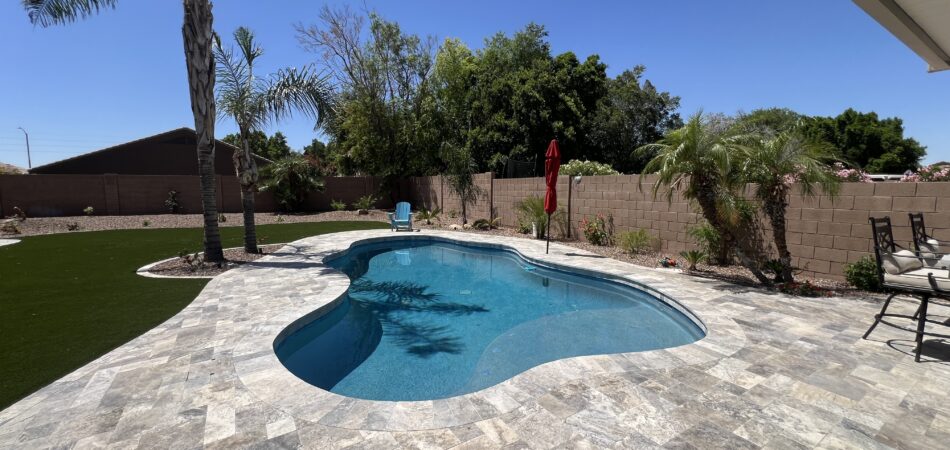
When designing your ideal outdoor living space in Arizona, one of the most important decisions you will make is whether to install pavers or pour a concrete slab. Both materials are widely used in backyard hardscaping, and each comes with its own benefits and drawbacks. In the desert climate of Arizona, factors such as heat, durability, aesthetics, and maintenance play a key role in determining which option is better suited for your home. This blog will guide you through the key considerations to help you decide between pavers or concrete patios for your backyard.
The Climate Factor: Arizona’s Heat and Soil Movement
Arizona’s climate presents unique challenges that homeowners must consider before selecting a material for backyard hardscaping. With extreme summer temperatures regularly exceeding 100 degrees Fahrenheit, surfaces can get unbearably hot. This matters not only for your comfort but also for the longevity of your hardscaping investment.
Concrete, when exposed to intense heat, tends to absorb and retain that heat longer than pavers. Walking barefoot on a concrete patio in the middle of July can be uncomfortable or even dangerous. Pavers, especially those made with light-colored materials or natural stone, can stay cooler underfoot, offering a more enjoyable outdoor experience.
Another issue is soil movement. Arizona has clay-heavy soils that expand and contract with moisture. This can cause concrete slabs to crack over time, particularly if not properly installed with control joints and a solid subbase. Pavers, on the other hand, are more flexible. If the ground shifts, individual pavers can adjust slightly without ruining the overall structure. In cases of damage, you can replace a single paver rather than tearing up an entire section.
Given these challenges, many Arizona homeowners lean toward pavers as a more adaptive solution to the region’s harsh climate and shifting soils. However, this is just the beginning of the comparison.
Aesthetic Versatility and Design Options
Backyard hardscaping is more than functionality. It is also about creating a visually appealing space where you and your guests can relax, entertain, or enjoy a desert sunset. When it comes to design, pavers offer a broader range of choices compared to concrete.
Pavers come in countless shapes, colors, sizes, and patterns. Whether you are aiming for a Mediterranean vibe, a sleek modern look, or a rustic desert theme, you can find pavers that match your style. Intricate designs such as herringbone, basketweave, or circular patterns are easily achievable. This versatility allows you to tailor the look of your backyard to suit the architecture of your home and your personal tastes.
Concrete, while initially more limited, has evolved with the help of decorative techniques. Stamped concrete can mimic the look of stone, brick, or tile, and colored concrete can provide visual interest beyond the basic gray slab. However, these treatments can fade over time, especially under Arizona’s intense sun. They may also increase installation costs significantly, narrowing the cost gap between plain concrete and pavers.
Ultimately, if you are focused on maximizing the visual impact of your backyard, pavers offer greater customization and long-term color stability. They allow for creative expression in ways that standard concrete may not easily support.
Installation Time, Cost, and Labor
For many homeowners, the decision between pavers or concrete patios often comes down to budget and timeline. There are notable differences in installation requirements that affect both factors.
Concrete patios are typically quicker to install. Once the site is prepared and forms are in place, the concrete is poured, leveled, and allowed to cure. This process can often be completed in just a few days, depending on weather and complexity. Because it requires less manual labor during the placement phase, concrete is often more affordable upfront than pavers.
Pavers, on the other hand, involve a more labor-intensive process. Each unit is placed individually over a base of compacted sand and gravel, and alignment must be precise. This means installation can take longer, sometimes stretching over a week for larger areas. The extra labor involved often results in higher upfront costs compared to concrete.
However, installation is not the whole story. Pavers generally offer lower maintenance and repair costs over the long term. If a concrete slab cracks, patching it rarely results in an invisible repair. In contrast, a damaged paver can be lifted and replaced without disrupting the entire patio. This flexibility can save money and hassle in the future.
So, while concrete might win on speed and initial price, pavers may prove more economical over the life of your patio, especially in a climate that demands regular upkeep.
Maintenance and Longevity
Durability is a top concern for any outdoor surface. Arizona’s sun, dust, and monsoon rains all take a toll on backyard hardscaping materials. The long-term performance of concrete and pavers in these conditions can vary considerably.
Concrete is strong and can last decades if installed properly. However, cracks are a common issue, particularly in areas with shifting soil or freeze-thaw cycles. Even with expansion joints, it is difficult to guarantee a crack-free surface. Additionally, Arizona’s UV radiation can cause decorative concrete coatings or colors to fade over time, requiring resurfacing or sealing to maintain appearance.
Pavers are extremely durable and often come with warranties of 25 years or more. Their interlocking design allows them to withstand pressure and minor ground shifts without breaking. If maintenance is needed, it is often limited to brushing sand between the joints or re-leveling specific areas. Sealing pavers can help resist stains and enhance color, though it is optional and infrequent.
Another advantage of pavers in Arizona is drainage. Paver patios allow water to seep between the joints, reducing runoff and helping prevent puddling during monsoon storms. Concrete, unless properly sloped and drained, can develop pooling problems that lead to erosion or water damage.
In terms of maintenance, pavers require a bit more attention to detail when it comes to weed growth or joint stabilization. However, these issues are generally minor and easily managed with occasional sweeping or joint sand replacement. The overall resilience and ease of repair make pavers a long-lasting choice that holds up well in Arizona’s demanding environment.
Property Value and Long-Term Investment
Your backyard is more than a recreational space. It is an extension of your home and can influence its overall value. Choosing the right material for your patio not only affects your daily enjoyment but can also impact resale potential.
Pavers are widely viewed as a premium hardscaping material. Their custom appearance and longevity tend to appeal to prospective buyers looking for a stylish, low-maintenance outdoor space. Real estate agents often highlight features like paver patios in listings, knowing they convey a sense of quality.
Concrete patios, while functional, do not always generate the same excitement. A plain concrete slab may be perceived as utilitarian rather than inviting. Stamped or stained concrete can add character, but again, these finishes may not hold up well over time in the Arizona sun, potentially diminishing their appeal.
From an investment perspective, pavers can offer a higher return due to their durability, aesthetic impact, and ease of repair. Although you may pay more initially, the long-term benefits and enhanced curb appeal can justify the cost. This is especially true if you live in a neighborhood where outdoor living is a major selling point.
For homeowners planning to stay in their home for the long haul, pavers represent a smart investment that continues to deliver value year after year. For those looking to sell in the near future, a well-designed paver patio can help your home stand out in a competitive market.
Conclusion
When it comes to backyard hardscaping in Arizona, the choice between pavers and concrete is not a simple one-size-fits-all answer. Each material offers distinct advantages depending on your priorities, budget, and long-term goals.
Concrete patios provide a quick, cost-effective solution with a clean and straightforward look. They may be suitable for homeowners seeking a fast installation and who are less concerned about future repairs or aesthetic complexity. However, their susceptibility to cracking and heat retention makes them less ideal for Arizona’s dynamic soil and scorching temperatures.
Pavers, by contrast, offer unmatched flexibility, visual appeal, and resilience. While they require a higher initial investment and longer installation time, their adaptability to soil movement, ease of repair, and lasting beauty make them a wise choice for many Arizona homeowners.
Ultimately, choosing between pavers or concrete patios comes down to how you plan to use your backyard, how long you intend to stay in your home, and how much you value customization and durability. In Arizona’s harsh climate, where outdoor spaces are a crucial part of everyday living, investing in the right material can elevate your backyard into a lasting extension of your home.
Need a Landscape Designer in Phoenix, AZ?
Landscape 20/20 is a family run business. We are a team of some of the best designers, masons, landscapers, and service people around. We take pride in the quality of our work and offer very competitive pricing. We offer services such as pavers, travertine, barbecues, fire pits, turf, pergolas, and everything else that has to deal with landscaping. With over 30 years of experience and a strong desire to make sure our customers fall in love with their yards, we strive for the best service and final product. Contact us today and let us do our best to help make your landscape experience the best possible.