
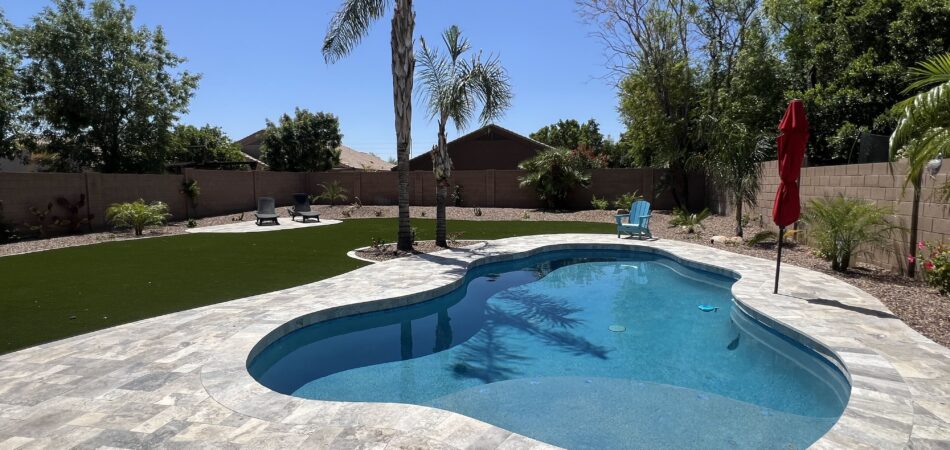
Paver patios, travertine pool decks, walkways, and outdoor living areas in North Phoenix face intense sun, windblown dust, irrigation residue, and seasonal monsoon debris. Without routine care, attractive hardscaping can gradually develop stains, weeds, faded joint material, or surface damage.
Quick answer: Cleaning and maintaining pavers and travertine starts with regular sweeping, prompt stain removal, controlled washing, joint inspection, and careful use of cleaners that are appropriate for the surface. Travertine requires particular caution because acidic or overly aggressive products can damage natural stone. Paver joints may also need fresh sand after cleaning or erosion. Consistent maintenance is usually easier than trying to restore heavily neglected hardscaping.
What local property owners should know
-
Regularly removing desert dust and organic debris can reduce staining and buildup on outdoor hardscapes.
-
Monsoon runoff around Deer Valley, Norterra, and other parts of the Valley can move debris and erode material from paver joints.
-
Travertine should generally be cleaned with products intended for natural stone rather than acidic household cleaners.
-
Irrigation overspray can leave mineral deposits and discoloration on pavers, walls, and stone.
-
Joint loss, drainage problems, loose pavers, and damaged stone deserve attention before cosmetic cleaning alone.
Why Paver and Travertine Maintenance Matters in North Phoenix
Paver and travertine maintenance matters in North Phoenix because desert conditions continually expose outdoor surfaces to sunlight, dust, irrigation water, and sudden storm runoff. These conditions can affect appearance while also contributing to joint erosion, staining, weed growth, and uneven surfaces when maintenance or drainage issues are allowed to continue.
Properties around Desert Ridge, Moon Valley, Deer Valley, and the Phoenix Mountain Preserve often rely heavily on hardscaping as part of low-water landscapes and outdoor living spaces. That makes the condition of patios, walkways, pool surrounds, and gathering areas especially noticeable.
Landscape 20/20 LLC helps local property owners address landscaping needs in this environment. We look at hardscape maintenance as part of the surrounding landscape, including drainage, irrigation, soil, plants, and other conditions that can affect paved areas.
What We Commonly See in the Sonoran Desert
Common field observations in the Sonoran Desert include dusty surfaces, irrigation marks, debris accumulation, joint deterioration, and staining around heavily used outdoor areas. These are professional field observations rather than published statistics, and the exact condition of a property depends on its materials, drainage, irrigation layout, exposure, and maintenance history.
A shaded patio may develop different problems than a fully exposed driveway. Likewise, landscaping near Cave Creek or the northern edge of Phoenix can experience concentrated runoff during storms even after months of extremely dry conditions.
How Dirty or Damaged Hardscaping Affects Your Property
Dirty or poorly maintained hardscaping can affect appearance, usability, drainage, and the long-term condition of an outdoor space. What begins as surface dirt can become harder to address when stains set, weeds establish in joints, sand washes away, or movement creates uneven sections.
Around pools, travertine also deserves careful maintenance because using an inappropriate cleaning method can leave the stone looking worse rather than better. Identifying the surface before selecting a cleaner is an important first step.
Warning Signs Your Pavers or Travertine Need Attention
Pavers and travertine usually need attention when visible buildup, joint deterioration, movement, staining, or drainage changes begin appearing. Local homeowners can catch many problems early simply by walking their property after irrigation cycles and monsoon storms and looking closely at patios, paths, driveways, and pool areas.
Watch for:
-
Weeds or grass emerging from paver joints
-
Joint sand that has washed or blown away
-
White or chalky-looking mineral deposits
-
Dark organic stains or accumulated debris
-
Loose, rocking, or uneven pavers
-
Cracked, chipped, or deteriorating stone
-
Water consistently collecting in low areas
-
Stains that remain after normal surface cleaning
When Should You Call a Landscaping Professional?
Professional help makes sense when cleaning alone will not correct the problem or when the hardscape has drainage, movement, joint, or surrounding landscape issues. Basic sweeping and gentle spot cleaning are reasonable homeowner tasks, but persistent staining, settlement, widespread joint loss, and recurring runoff problems may require a closer evaluation.
In North Phoenix, a repeated hardscape problem may originate outside the paved area. Irrigation overspray, poor grading, concentrated roof runoff, or landscape drainage can continually bring water and debris back onto the same surface.
What Commonly Causes Paver and Travertine Problems?
The most common local causes are desert debris, irrigation residue, intense exposure, stormwater movement, organic staining, and loss of material from hardscape joints. Understanding the cause matters because repeatedly cleaning a surface will not solve an irrigation or drainage problem that continues depositing water, minerals, or sediment.
-
Dust and debris: Sonoran Desert conditions continually bring fine material onto patios and walkways.
-
Irrigation overspray: Repeated water exposure may leave mineral residue and encourage staining.
-
Monsoon runoff: Fast-moving stormwater can carry sediment and disturb paver joints.
-
Organic material: Leaves, plant debris, food, and other material can discolor porous surfaces.
-
Joint deterioration: Lost sand can allow weeds to establish and may reduce paver stability.
-
Improper cleaning: Harsh chemicals or aggressive pressure can damage surfaces and joints.
How to Prevent Buildup and Maintain Hardscaping
The best maintenance routine combines frequent dry cleaning with periodic gentle washing, stain treatment, joint checks, and drainage inspections. For North Phoenix properties, maintenance is especially useful before and after monsoon activity because accumulated debris can enter drains, collect in low areas, or move across patios during heavy rainfall.
Sweep or blow off loose debris regularly. Address spills before they penetrate porous material. Check irrigation heads for overspray, and inspect paver joints after major storms.
For travertine, use a cleaner specifically appropriate for natural stone and follow its directions. Avoid assuming that vinegar, acidic cleaners, or a powerful pressure washer are safe simply because they remove visible buildup.
What Results Can You Expect From Proper Maintenance?
Proper maintenance can improve cleanliness, reduce buildup, preserve joint condition, and help outdoor hardscaping remain functional and attractive. Results vary according to the age and condition of the material, the type and depth of staining, previous treatments, and whether underlying drainage or settlement problems are present.
Cleaning cannot necessarily make older pavers or natural stone look new. Permanent discoloration, etching, cracks, chips, or structural movement may require a different solution.
Common Paver and Travertine Cleaning Mistakes
The biggest maintenance mistakes involve using overly aggressive cleaners, excessive pressure, or treating symptoms without correcting their source. These approaches can create additional work, particularly on porous natural stone and paver installations exposed to North Phoenix irrigation and stormwater conditions.
Mistake: Using acidic household products on travertine.
Consequence: Acid can etch or dull calcium-based natural stone.
Better approach: Choose a product specifically labeled as suitable for natural stone.
Mistake: Blasting paver joints with high pressure.
Consequence: Joint material can be removed.
Better approach: Use controlled cleaning and inspect the joints afterward.
Mistake: Cleaning irrigation stains without adjusting overspray.
Consequence: The residue returns.
Better approach: Correct the water source as part of maintenance.
A Common Local Hardscape Scenario
A common local scenario is a patio or pool area that looks acceptable through the dry season but develops debris, stains, or joint erosion after irrigation exposure and summer storms. The homeowner cleans the visible surface, only to see the same problem return because runoff or overspray was never addressed.
The better approach is to evaluate the hardscape together with nearby grading, irrigation, planting beds, and drainage paths.
Related Landscaping Solutions
Related landscaping solutions may include hardscape cleaning and maintenance, joint attention, irrigation adjustments, drainage improvements, and landscape changes that reduce recurring debris or water exposure. The appropriate solution depends on whether the problem is cosmetic, maintenance-related, or connected to the surrounding landscape.
Landscape 20/20 LLC can help property owners evaluate landscaping conditions and determine appropriate options for their outdoor spaces.
DIY Cleaning vs. Professional Service
DIY maintenance works best for routine sweeping, gentle washing, and minor surface cleanup, while professional service becomes more useful for recurring or complicated problems. Homeowners should be especially cautious when they are unsure what material they have, which cleaner is safe, or why pavers have become uneven.
A professional evaluation can also consider issues beyond cleaning, such as drainage, irrigation, joint condition, and surrounding landscape features.
Areas We Serve
Our landscaping services support property owners in North Phoenix and surrounding communities based on project location and service availability. This includes areas around Deer Valley, Desert Ridge, Norterra, Moon Valley, and nearby parts of the northern Valley.
Contact us to confirm service availability for your specific property.
What Happens If Hardscape Maintenance Is Delayed?
Delayed maintenance can allow stains, weeds, joint erosion, drainage problems, and surface deterioration to become more difficult to address. The goal is not to treat every dusty patio as an emergency, but to recognize when recurring water, movement, or deterioration indicates something more than routine desert cleanup.
Frequently Asked Questions About Pavers and Travertine
How often should pavers be cleaned in North Phoenix?
Pavers should be cleaned as needed based on dust exposure, landscaping, irrigation, traffic, and seasonal debris. Routine sweeping or blowing can handle loose desert material, while deeper cleaning may be appropriate when stains and buildup appear. Checking the surface after monsoon storms is also useful because runoff can redistribute sediment and joint material.
Can I pressure wash pavers in North Phoenix?
Pavers can sometimes be pressure washed, but excessive pressure can remove joint material or affect the surface. The appropriate method depends on the paver type and condition. Controlled cleaning is preferable to automatically using maximum pressure, particularly when joints are already thin or the installation shows movement.
Is pressure washing safe for travertine?
Pressure washing travertine requires caution because natural stone can be damaged by overly aggressive cleaning. Before using pressure equipment, identify the stone, its condition, and any existing finish or treatment. A gentler method and natural-stone-compatible cleaner may be more appropriate for many residential patios and pool areas.
Can I use vinegar to clean travertine?
Vinegar should not be used as a routine travertine cleaner because travertine is a calcium-based natural stone that can react with acids. Acidic products can etch the surface and change its appearance. Use a cleaner intended for natural stone and follow the product manufacturer’s instructions.
Why do my paver joints lose sand after Phoenix monsoons?
Paver joints can lose material when concentrated water, repeated cleaning, or runoff moves sand from between the units. Summer storm activity can make existing drainage problems more noticeable. If the same joints repeatedly wash out, inspect nearby grading and drainage rather than continually replacing sand without addressing the cause.
Why do I get white marks near my irrigation system?
White or chalky residue may be associated with minerals left behind as irrigation water evaporates, although the exact cause should be identified before treatment. In the dry Valley climate, repeated overspray can make deposits increasingly visible. Adjusting irrigation may help prevent the problem from repeatedly returning after cleaning.
Should pavers in Maricopa County be sealed?
Whether pavers should be sealed depends on the specific paver, desired appearance, existing condition, and compatible sealing product. Sealing is not a universal requirement for every installation. Before applying anything, confirm that the product is intended for the material and understand the preparation and future maintenance it requires.
What should I check after a North Phoenix monsoon storm?
After a North Phoenix monsoon storm, check paver joints, low areas, drainage routes, sediment accumulation, and any sections that appear to have shifted. Also look for debris blocking water paths. Early inspection can reveal whether the area simply needs cleanup or whether runoff is repeatedly affecting the hardscape.
Keep Your North Phoenix Hardscaping Ready for Desert Conditions
Regular cleaning, careful product selection, joint inspections, and attention to irrigation and drainage can help pavers and travertine handle the demanding Sonoran Desert environment. When a problem keeps returning, looking beyond the surface often reveals the real maintenance issue.
Protect Your Outdoor Living Space
Keep your pavers, travertine, and surrounding landscape easier to maintain through every desert season. We can help you evaluate the condition of your outdoor space and identify practical landscaping solutions based on the property.