
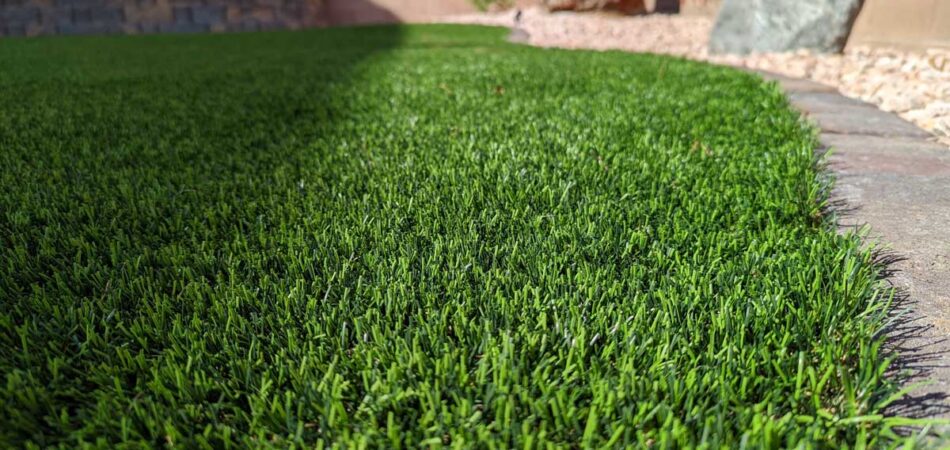
Artificial turf can handle the intense sun and dry conditions of North Phoenix, but it still needs regular care. Dust, desert debris, pet waste, monsoon runoff, and heavy foot traffic can leave synthetic grass looking flattened or dirty even when there is no natural lawn to mow.
The best way to clean and maintain artificial turf in North Phoenix, AZ is to remove loose debris regularly, rinse dusty areas as needed, clean spills and pet waste promptly, brush flattened fibers, and periodically inspect seams, edges, infill, and drainage. Consistent maintenance helps the surface stay cleaner, drain properly, and maintain a more natural appearance through Arizona’s demanding desert conditions.
What North Phoenix property owners should know
-
Artificial turf does not require mowing or traditional lawn irrigation, but it is not completely maintenance-free.
-
Desert dust and windblown debris can accumulate between turf fibers, especially during dry and windy periods in the Valley.
-
Monsoon storms can deposit leaves, dirt, twigs, and other debris onto turf and may reveal drainage problems.
-
Pet areas typically require more frequent cleaning than lightly used decorative turf.
-
Regular brushing can help restore fibers that become flattened along walkways, play areas, and other high-traffic spots.
Why Does Artificial Turf Maintenance Matter in North Phoenix?
Artificial turf maintenance matters in North Phoenix because desert heat, airborne dust, monsoon weather, pets, and frequent outdoor use can affect how a synthetic lawn looks, smells, and drains. A simple maintenance routine helps property owners address these conditions before buildup or wear becomes harder to manage.
Properties around Deer Valley, Norterra, Desert Ridge, and nearby communities experience the same broad Sonoran Desert conditions that make artificial turf attractive in the first place. There is no natural grass to mow, but exposed outdoor surfaces still collect dust, leaves, pollen, and debris.
Landscape 20/20 LLC understands that turf care in this part of the Valley needs to account for local conditions. We recommend treating artificial grass as a low-maintenance landscape surface rather than assuming it requires no maintenance at all.
What Do Local Conditions Mean for Artificial Turf Care?
Local conditions mean North Phoenix turf often needs attention for dust, debris, heat exposure, and seasonal storm cleanup rather than the mowing and watering associated with natural grass. The right maintenance frequency depends on pets, surrounding vegetation, foot traffic, drainage, and how exposed the installation is to wind and runoff.
A useful field observation for Phoenix-area properties is that maintenance needs can change substantially from one yard to another. Turf beside a pool may face different debris than a pet run, while a backyard near desert landscaping may collect fine dirt and plant material more frequently.
After a monsoon storm, for example, checking the turf surface and perimeter can be worthwhile. Leaves and debris should be removed, and areas where water pooled or carried sediment onto the turf deserve closer attention.
How Does Dirt and Wear Affect Artificial Turf?
Dirt and wear can make artificial turf look dull, flatten fibers, create unpleasant pet-area odors, and interfere with the clean appearance homeowners expect from synthetic grass. High-use sections typically show these effects sooner than decorative areas that receive little foot traffic.
This is especially noticeable around patios, pool areas, gates, children’s play spaces, and frequently traveled backyard paths. Fine desert material can settle below the visible tips of the turf blades, so a surface may need attention even when there are no large leaves or branches present.
Regular care also gives homeowners an opportunity to notice loose edges, seam concerns, uneven areas, or drainage changes before they become more disruptive.
What Are the Warning Signs That Artificial Turf Needs Maintenance?
Artificial turf needs maintenance when visible debris, odors, flattened fibers, staining, drainage problems, or changes around seams and edges begin affecting the surface. North Phoenix homeowners should inspect turf periodically and pay additional attention after storms, heavy use, or pet activity.
Watch for:
-
Turf fibers that remain noticeably flattened in high-traffic areas.
-
Leaves, twigs, seed pods, or desert debris accumulating across the surface.
-
Persistent odors in areas frequently used by pets.
-
Dirt or sediment left behind after a monsoon storm.
-
Water pooling or draining differently than it normally does.
-
Edges that appear lifted, loose, or disturbed.
-
Seams that become more visible or appear to be separating.
-
Stains or spills that do not respond to appropriate routine cleaning.
When Should You Call a Professional for Artificial Turf Maintenance?
Professional artificial turf service is worth considering when routine debris removal, rinsing, and brushing do not correct the problem or when you notice drainage, seam, edge, infill, or installation-related concerns. Homeowners can handle basic surface cleaning, but structural turf problems require more careful evaluation.
Removing loose leaves or promptly cleaning a minor spill is different from diagnosing recurring pooling or repairing a separating seam. Likewise, aggressive DIY cleaning can create additional problems if the wrong equipment or chemicals are used.
If a section looks uneven, will not drain correctly, or repeatedly develops an odor despite cleaning, a professional assessment can help identify whether the issue is on the surface or related to the turf system underneath.
What Commonly Makes Artificial Turf Dirty in North Phoenix?
The most common sources of dirty artificial turf in North Phoenix are desert dust, windblown landscaping debris, pets, foot traffic, spills, and monsoon storms. Each source creates a slightly different maintenance need, so cleaning should address the actual problem rather than relying on one aggressive method for every situation.
Desert dust and soil: Fine particles can settle between synthetic blades during extended dry periods.
Monsoon debris: Summer storms can carry leaves, branches, dirt, and other material across yards.
Pets: Solid waste should be removed promptly, and frequently used areas may need additional rinsing and odor management.
Foot traffic: Repeated use around gates, patios, pools, and play areas can flatten fibers.
Nearby landscaping: Trees, shrubs, and desert plants can drop leaves, flowers, seed pods, and other organic material onto turf.
How Should You Maintain Artificial Turf Throughout the Year?
Artificial turf should be maintained with regular debris removal, targeted rinsing, prompt spot cleaning, periodic brushing, and inspections after unusual weather or heavy use. In the Phoenix area, maintenance should respond to seasonal dust and monsoon activity rather than following the same schedule regardless of conditions.
Remove loose material with tools suitable for synthetic turf. When dust accumulates, rinsing can help clear material from the blades. Clean pet waste and spills promptly rather than allowing them to remain on the surface.
Brush high-traffic sections when fibers become matted, following the turf manufacturer’s care recommendations. Avoid assuming that any stiff brush, chemical cleaner, or power equipment is safe for your particular turf product.
During monsoon season, inspect the yard after significant storms. Remove debris and check whether water is moving through and away from the turf as expected.
What Results Can You Expect From Regular Turf Maintenance?
Regular turf maintenance can help artificial grass remain cleaner, more upright, and more visually consistent while making it easier to identify developing problems. Maintenance cannot reverse every form of wear or correct an underlying installation problem, but it can reduce avoidable buildup and keep routine issues manageable.
A well-maintained surface should generally be free of significant loose debris and obvious contamination. High-traffic fibers may respond to appropriate brushing, while rinsing and targeted cleaning can address many everyday sources of dirt.
Results depend on the turf’s age, installation, use, exposure, and current condition.
What Artificial Turf Cleaning Mistakes Should You Avoid?
The biggest artificial turf cleaning mistakes involve using overly aggressive tools, applying unsuitable chemicals, ignoring pet contamination, and overlooking drainage or seam problems. A gentler maintenance routine that follows the turf manufacturer’s recommendations is usually a better approach for Phoenix-area synthetic lawns.
Mistake: Waiting until debris becomes heavily compacted.
Consequence: Dirt and organic material can become harder to remove.
Better approach: Perform light cleanup regularly.
Mistake: Using an unknown harsh chemical.
Consequence: The product may be unsuitable for the turf materials.
Better approach: Follow the manufacturer’s cleaning guidance.
Mistake: Ignoring recurring pet odors.
Consequence: Rinsing the visible surface may not address the full issue.
Better approach: Clean promptly and seek professional help when odor repeatedly returns.
Mistake: Treating pooling water as a cleaning issue.
Consequence: Recurring pooling may involve drainage or installation conditions.
Better approach: Have persistent drainage problems evaluated.
What Is a Common North Phoenix Turf Maintenance Scenario?
A common North Phoenix scenario is a backyard turf area that looks good most of the year but accumulates dust and debris during dry weather, followed by a heavier cleanup need after a summer monsoon. Pet use or regular traffic between the patio and yard can add another layer of maintenance.
The homeowner can begin by removing storm debris, checking for sediment, rinsing appropriate areas, and inspecting how the turf drains. Flattened high-traffic sections may benefit from proper brushing.
If pooling, loose edges, separated seams, or persistent odors remain afterward, the situation has moved beyond ordinary surface cleanup and may warrant professional attention.
Which Artificial Turf Services Can Help?
Artificial turf services can help when a property needs more than ordinary homeowner cleaning, particularly when appearance, drainage, seams, edges, infill, or the underlying installation may be involved. A professional evaluation can separate a routine maintenance issue from a condition that requires corrective work.
At Landscape 20/20 LLC, we can help property owners determine the appropriate next step based on the turf’s current condition rather than treating every concern as the same problem.
Should You Clean Artificial Turf Yourself or Call a Professional?
DIY artificial turf cleaning works well for many routine tasks, while professional service is more appropriate for persistent or installation-related problems. The practical dividing line is whether the issue involves ordinary surface maintenance or something homeowners cannot safely correct through debris removal, rinsing, and manufacturer-approved care.
Routine leaf removal, basic spot cleanup, and visual inspections are reasonable homeowner tasks. Persistent odors, drainage problems, seam separation, lifted edges, unusual settling, or significant deterioration deserve closer evaluation.
For homeowners from North Phoenix toward Cave Creek and the North Valley, periodic observation is especially useful after periods of heavy wind or monsoon activity.
What Areas Can Benefit From Locally Appropriate Turf Care?
Locally appropriate artificial turf care is useful throughout North Phoenix and surrounding North Valley communities where heat, dust, desert landscaping, pets, and seasonal storms affect outdoor surfaces. Properties around Deer Valley, Norterra, Desert Ridge, and nearby Cave Creek may face different exposure levels depending on landscaping and site conditions.
The maintenance plan should reflect the individual property rather than simply its ZIP code.
What Happens If Artificial Turf Maintenance Is Ignored?
Ignoring artificial turf maintenance can allow debris, staining, odors, flattened fibers, and unnoticed drainage or edge problems to become more difficult to address. In North Phoenix, extended dry periods and seasonal monsoon debris make occasional inspection particularly useful for keeping small maintenance needs from accumulating.
Neglect does not mean every turf problem will become a major repair. The practical concern is that routine cleaning also serves as an opportunity to spot changes. If no one checks seams, edges, drainage, or high-traffic sections, developing issues can remain unnoticed longer.
FAQ
How often should I clean artificial turf in North Phoenix, AZ?
Artificial turf in North Phoenix should be cleaned according to its actual exposure and use rather than a single fixed schedule. Remove obvious debris when it appears, address pet waste and spills promptly, and inspect the surface after dusty conditions or monsoon storms. Pet areas and high-traffic yards usually need attention more frequently.
Should artificial turf be rinsed in Phoenix?
Artificial turf can be rinsed when appropriate to remove dust and residue, provided the installation drains correctly and the turf manufacturer’s instructions allow it. Phoenix’s dry, dusty conditions can leave fine material on synthetic blades. Rinsing should complement debris removal rather than substitute for addressing drainage, pet contamination, or other specific problems.
How do I clean artificial turf after a North Phoenix monsoon?
Start by removing branches, leaves, and other loose storm debris from the artificial turf, then inspect for dirt deposits, displaced material, and unusual pooling. Appropriate rinsing may help remove finer residue. If a storm reveals persistent drainage problems, loose edges, or seam movement, consider having the affected area professionally evaluated.
How do I maintain artificial turf when I have dogs?
Remove solid pet waste promptly, clean affected areas regularly, and pay attention to persistent odors rather than masking them. Dog runs and favorite bathroom spots generally need more frequent care than the rest of a yard. If odors repeatedly return despite appropriate surface cleaning, the area may need a more thorough assessment.
Can I use a pressure washer on artificial turf in North Phoenix?
Do not assume a pressure washer is appropriate for your artificial turf. Excessive or incorrectly applied pressure could affect fibers, infill, seams, or edges depending on the installation. Check the turf manufacturer’s maintenance instructions first. For deep cleaning needs, using methods appropriate for the specific turf system is the safer approach.
Why is my artificial turf flattening near my Phoenix patio?
Artificial turf often flattens near patios because repeated foot traffic pushes fibers in the same direction. Appropriate brushing may help restore the appearance when the turf is otherwise in good condition. If the area also feels uneven or shows movement, inspect it more closely because the issue may extend beyond flattened blades.
What should I check after a dust storm in the North Valley?
After a North Valley dust event, check artificial turf for fine dirt buildup, windblown debris, clogged surface areas, and material collected along edges. Remove larger debris first and use an appropriate cleaning method for remaining dust. Properties near exposed desert areas may require more frequent checks during particularly windy periods.
When does artificial turf need professional attention in Maricopa County?
Artificial turf may need professional attention when it develops persistent drainage issues, recurring odors, loose or lifted edges, visible seam separation, significant unevenness, or problems that ordinary maintenance does not resolve. Routine surface cleaning is often manageable for homeowners, but installation-related conditions deserve a closer assessment before attempting extensive DIY repairs.
Keep Your North Phoenix Artificial Turf Looking Its Best
Regular cleaning is one of the simplest ways to protect the appearance and usability of artificial turf in North Phoenix. By staying ahead of desert dust, monsoon debris, pet messes, and high-traffic wear, homeowners can keep maintenance manageable while identifying problems that may need professional attention.
Get Help With Your North Phoenix Artificial Turf
We help local property owners evaluate artificial turf concerns and identify practical service options based on the condition of the yard.