
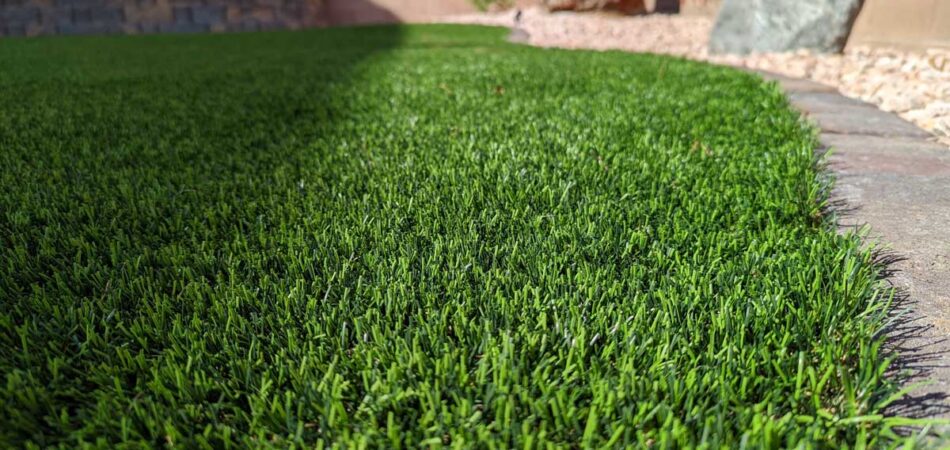
Choosing between desert landscaping and artificial turf in North Scottsdale and North Phoenix is not just an aesthetic decision. Intense summer heat, limited rainfall, irrigation needs, dust, and the way outdoor spaces are actually used can all influence which option makes more sense for a Valley property.
Quick answer: Desert landscaping is often a strong choice for homeowners who want a low-water yard that fits naturally with the Sonoran Desert environment. Artificial turf can make more sense when you want a consistently green, usable surface for children, pets, recreation, or a defined backyard living area. For many properties, the best solution is not choosing one exclusively. Combining desert landscaping with strategically placed artificial turf can provide both a desert-appropriate appearance and functional green space.
What local homeowners should know
-
Desert landscaping can reduce the amount of living lawn that needs regular irrigation while complementing the natural look of the Sonoran Desert.
-
Artificial turf provides a green surface without routine lawn watering, but its surface can become very hot under direct Arizona summer sun.
-
North Scottsdale properties near areas such as Troon North and DC Ranch may have different lot sizes, terrain, drainage conditions, and neighborhood requirements that affect landscape planning.
-
North Phoenix yards near communities such as Desert Ridge and the Sonoran Preserve can benefit from designs that account for heat, sun exposure, drainage, and surrounding desert character.
-
A blended design can use rock, desert-adapted plants, trees, and hardscape around smaller turf areas instead of covering an entire yard with one material.
Why Does This Landscaping Choice Matter in North Scottsdale and North Phoenix?
The choice matters in North Scottsdale and North Phoenix because desert heat, intense sunlight, water use, drainage, and outdoor-living needs affect how both desert landscaping and artificial turf perform. A material that looks attractive in a sample can behave very differently after years of exposure to Arizona conditions.
The Phoenix metro area sits within the Sonoran Desert, where landscaping decisions naturally revolve around sun exposure and water. Large areas of traditional grass require irrigation, while desert landscaping can create visual interest without trying to reproduce a wetter climate.
Artificial turf solves a different problem. It gives homeowners a defined green surface without mowing or maintaining living grass. However, homeowners should consider where the turf will sit, how much direct afternoon sun it receives, and how people or pets will use it.
Landscape 20/20 LLC helps homeowners evaluate landscape options based on the property itself. We look at how different materials, plants, and usable areas can work together rather than treating every yard as if it needs the same solution.
What Do Local Climate Conditions Mean for Each Option?
Local climate conditions generally favor water-conscious desert landscaping, while artificial turf offers functionality without routine lawn irrigation but requires careful planning for heat and drainage. In both cases, successful installation starts with designing for desert conditions rather than simply choosing a surface based on appearance.
The National Weather Service describes the Phoenix climate as having extremely hot summers, mild winters, and limited annual precipitation. Those conditions are central to landscape design throughout the Valley.
For desert landscaping, that environment makes desert-adapted plants, rock, gravel, shade elements, and carefully planned irrigation natural choices.
For artificial turf, sunlight deserves particular attention. Synthetic surfaces exposed to direct summer sun can become uncomfortable to touch. Shade patterns from the home, walls, trees, ramadas, or other structures can therefore influence where turf is most practical.
Monsoon rainfall is another consideration. Although the Valley is dry for much of the year, intense storms can produce substantial runoff over short periods. Proper grading and drainage remain important whether the finished yard uses turf, rock, hardscape, or a combination.
How Does Each Option Affect Your Yard?
Desert landscaping creates a more natural Arizona appearance and can support lower-water planting, while artificial turf creates a predictable green surface designed for regular use. The practical difference comes down to whether a section of your yard is primarily meant to provide visual landscaping or function as an activity area.
A front yard in North Scottsdale, for example, may benefit from layered desert plants, accent boulders, decorative rock, and trees that complement surrounding desert terrain.
A North Phoenix backyard used by children or pets may have a stronger reason for a turf area. The surface can define a play zone while surrounding beds retain a desert landscape.
Neither approach eliminates maintenance entirely. Desert landscapes can still require pruning, weed management, irrigation checks, debris removal, and plant replacement. Artificial turf can require debris removal, cleaning, brushing, and attention to pet waste or odors where applicable.
What Signs Suggest Your Current Yard Needs a Different Approach?
Your current landscape may need a different approach when it consumes more water or maintenance than you want, provides little usable space, or repeatedly struggles with Arizona heat and site conditions. Looking at recurring problems can help determine whether desert landscaping, turf, or a combination would be a better fit.
Watch for these signs:
-
Grass repeatedly develops stressed or bare areas despite regular care.
-
Irrigation is being used extensively for lawn areas that receive little actual use.
-
Your yard has large empty rock areas but lacks plants, shade, or visual structure.
-
Children or pets do not have a comfortable, defined activity space.
-
Runoff or puddling appears after irrigation or monsoon storms.
-
Existing plants consistently struggle in areas with intense reflected or afternoon heat.
-
You spend more time maintaining the yard than using it.
When Should You Call a Landscaping Professional?
A landscaping professional is worth calling when changing your yard involves grading, drainage, irrigation modifications, significant material installation, plant selection, or integrating several landscape elements. Homeowners can handle basic cleanup and planning, but larger transformations can create expensive problems when the underlying site is overlooked.
For example, replacing a lawn with rock is not necessarily as simple as removing grass and spreading gravel. Irrigation zones may need to change, existing grades should be evaluated, and new plants need appropriate placement.
Artificial turf also depends heavily on preparation beneath the visible surface. Drainage, edges, transitions, and surrounding materials all affect the finished space.
Before making major changes, homeowners should also check any applicable HOA requirements or community landscape guidelines.
What Common Local Conditions Should Influence Your Decision?
The most important local conditions are direct sun exposure, water needs, drainage, existing irrigation, yard usage, and the amount of surrounding hardscape. These factors can make the same landscaping material work well in one Valley yard and poorly in another.
1. Direct Arizona sun: South- and west-facing areas can receive intense sun, making shade planning especially important around frequently used spaces.
2. Irrigation requirements: Desert-adapted planting can still require irrigation, particularly during establishment and depending on the plant species.
3. Monsoon drainage: Low areas and poor grading can create drainage problems regardless of the finished surface.
4. Reflected heat: Block walls, patios, driveways, and other hard surfaces can intensify heat around planting areas.
5. Yard usage: A decorative front yard and an actively used backyard usually should not be designed according to identical priorities.
How Can You Maintain Desert Landscaping or Artificial Turf?
Both options need maintenance, but the work is different: desert landscaping focuses on plants, weeds, irrigation, and debris, while artificial turf focuses on cleaning, debris removal, surface care, and maintaining heavily used areas. Planning for that maintenance before installation helps prevent unrealistic expectations.
For desert landscapes, periodically inspect drip irrigation for leaks or clogged emitters. Remove weeds before they establish, keep organic debris from accumulating excessively, and prune plants according to their needs rather than forcing every shrub into the same shape.
For turf, remove leaves and debris, address spills and pet waste promptly, and follow appropriate care practices for the installed turf system.
Before monsoon season, it is also useful to check drainage paths and make sure landscape materials are not obstructing areas intended to move stormwater away from structures.
What Results Can You Expect From a Landscape Redesign?
A well-planned redesign can create a yard that better matches Arizona conditions, household needs, and the amount of maintenance you are comfortable performing. The goal should be a functional outdoor environment rather than simply replacing one surface with another.
A desert landscape can create texture and seasonal interest through variations in plant form, color, rock, and hardscape.
Artificial turf can provide visual consistency and a clearly defined recreational surface.
A combination can deliver both. For example, a backyard might use turf near a covered patio while desert planting, trees, and decorative rock frame the perimeter.
What Mistakes Should Arizona Homeowners Avoid?
The biggest mistakes are choosing materials only for appearance, ignoring heat and drainage, and assuming either desert landscaping or artificial turf will be maintenance-free. North Valley yards perform better when the entire site is considered before materials are selected.
Mistake: Installing turf everywhere because green looks appealing.
Consequence: Areas that are rarely used may add unnecessary material and create more heat-exposed surface.
Better approach: Reserve turf for locations where a usable green surface provides a clear benefit.
Mistake: Calling a yard “desert landscaping” by covering everything with rock.
Consequence: The result can feel sparse and provide little shade or visual depth.
Better approach: Use appropriately selected plants, trees, accents, and hardscape to create layers.
Mistake: Ignoring drainage.
Consequence: Water can collect or move toward unwanted areas during irrigation or storms.
Better approach: Evaluate grading and drainage before installing the finished landscape.
What Is a Common North Valley Yard Scenario?
A common North Valley scenario is a homeowner who wants the low-water character of desert landscaping but still wants a comfortable green area for everyday backyard use. In that situation, treating turf and desert landscaping as competing choices can unnecessarily limit the design.
Consider a typical backyard with a covered patio, perimeter block walls, and a sunny open center. A homeowner might use a defined artificial turf section for play or recreation, then surround it with desert-adapted plants, rock, and selected shade elements.
This is a representative scenario, not a Landscape 20/20 LLC project case study. The appropriate layout depends on the individual property.
What Landscaping Solutions Can Address These Needs?
Landscape renovation, artificial turf installation, planting, irrigation work, hardscape, and drainage planning can be combined to create a yard suited to the property rather than forcing one solution everywhere. The specific services needed depend on what already exists and what the homeowner wants the finished space to accomplish.
We can help evaluate how turf, desert landscape materials, plants, and other landscape elements fit into a broader yard plan.
Desert Landscaping vs. Artificial Turf: How Do the Options Compare?
Desert landscaping is usually better for a natural, water-conscious Arizona aesthetic, while artificial turf is usually better for creating a consistent green activity surface without maintaining living grass. A hybrid landscape often makes sense when homeowners want both benefits.
| Consideration | Desert Landscaping | Artificial Turf |
|---|---|---|
| Appearance | Natural desert character | Consistent green surface |
| Routine lawn watering | Not needed, though plants may require irrigation | Not needed |
| Summer surface heat | Depends heavily on materials and shade | Can become very hot in direct sun |
| Best use | Planting beds, front yards, decorative areas | Play, pet, recreation, defined green areas |
| Maintenance | Weeds, pruning, irrigation, debris | Cleaning, debris, brushing, pet-area care |
| Design flexibility | High | Works best as part of a planned layout |
| Local character | Strong Sonoran Desert fit | Creates visual contrast with desert materials |
Where Can Homeowners Use These Landscape Options?
Desert landscaping and artificial turf can work throughout North Scottsdale and North Phoenix when the design accounts for the individual property’s sun, drainage, architecture, and intended use. Communities such as Troon North, DC Ranch, Desert Ridge, and areas near the Phoenix Sonoran Preserve can present very different landscape settings.
We can help homeowners consider options for yards across the North Valley based on their property’s existing conditions and goals.
What Can Happen If You Keep an Inefficient Landscape?
Keeping a landscape that no longer fits your needs can mean continued irrigation, maintenance, recurring plant or lawn problems, and outdoor space that your household rarely uses. Waiting is not necessarily an emergency, but recurring problems are a good reason to reconsider how the yard is designed.
A struggling lawn may continue requiring time and water. An all-rock yard that lacks shade or useful spaces may remain visually unfinished. Poor drainage can also continue showing up whenever irrigation runs or monsoon storms arrive.
FAQ About Desert Landscaping and Artificial Turf
Is artificial turf a good choice for North Scottsdale?
Artificial turf can be a good North Scottsdale choice when homeowners want a defined green area without maintaining living grass. It works especially well when its location is selected according to actual use, sun exposure, drainage, and surrounding landscape design. Turf exposed to intense direct summer sunlight can become very hot.
Is desert landscaping better for North Phoenix?
Desert landscaping can be an excellent fit for North Phoenix because it reflects the Sonoran Desert environment and can reduce reliance on water-intensive lawn areas. A successful design should go beyond decorative rock by incorporating appropriate plants, visual layers, irrigation planning, and potentially shade or hardscape elements.
Does artificial turf get hot in Phoenix?
Yes, artificial turf can become very hot in direct Phoenix sunlight, particularly during summer. That matters most in spaces used by children, pets, or barefoot adults. Homeowners should consider shade, exposure, intended use, and surrounding materials when deciding where artificial turf belongs within a landscape.
Does desert landscaping require no water?
No, desert landscaping is not necessarily water-free. Desert-adapted trees, shrubs, and other plants may still need supplemental irrigation, particularly while becoming established and depending on the species and conditions. The key difference is that a desert landscape can avoid maintaining large areas of water-dependent living lawn.
Is artificial turf good for dogs in North Scottsdale?
Artificial turf can provide North Scottsdale dog owners with a consistent pet area, but heat and sanitation require consideration. Turf in direct summer sunlight can become hot, and pet waste should be removed promptly. The underlying installation and drainage should also be appropriate for the way the space will be used.
Can I combine artificial turf and desert landscaping?
Yes, combining artificial turf and desert landscaping is often one of the most practical approaches for North Valley yards. Turf can define a recreational or pet area while rock, desert-adapted plants, trees, and hardscape handle surrounding spaces. This approach lets each material serve a specific purpose.
Should I remove my North Phoenix grass and replace it with turf?
Replacing North Phoenix grass with artificial turf may make sense if you want to eliminate routine lawn irrigation and mowing while retaining a green surface. It is not automatically the right choice for every square foot. Consider how the area is used, its sun exposure, drainage, and whether desert landscaping could serve part of the space better.
Do HOA rules affect landscaping in North Scottsdale?
HOA requirements can affect landscape changes in North Scottsdale communities, depending on the association and proposed project. Rules may address approved materials, plant palettes, visible front-yard changes, or review procedures. Homeowners should check the current requirements for their specific community before committing to a major landscape redesign.
Choose a Yard That Works With Arizona Living
Desert landscaping and artificial turf solve different problems. For North Scottsdale and North Phoenix homeowners, the strongest landscape plan is the one that considers summer heat, water, drainage, maintenance, aesthetics, and how the outdoor space will actually be used.
Landscape 20/20 LLC can help you explore a landscape design that fits your property and your priorities.
Create a More Functional North Valley Yard
Get a landscape plan built around your property’s conditions, outdoor-living goals, and Arizona environment.