
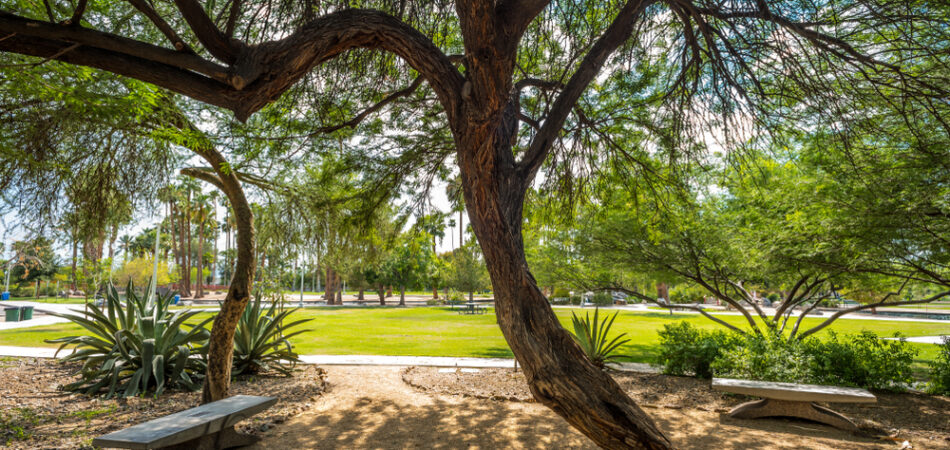
North Phoenix landscapes ask a lot from trees. Long stretches of extreme heat, intense afternoon sun, limited rainfall, irrigation demands, and summer monsoon storms can turn a beautiful planting choice into a maintenance problem if the species or placement is wrong.
Quick answer: The best trees for North Phoenix landscaping are generally heat-tolerant, drought-adapted species that can provide useful shade without creating excessive water demand or storm vulnerability. Desert willow, palo verde, mesquite, and several desert-adapted acacias are options worth considering. The right choice also depends on available space, irrigation, desired shade, proximity to structures, and how the tree will handle wind and monsoon conditions.
What local property owners should know
-
A tree that tolerates Phoenix heat is not automatically the right tree for every North Phoenix yard.
-
Shade placement matters because west-facing walls, patios, windows, and outdoor living areas receive especially punishing afternoon sun.
-
Monsoon winds make mature size, branch structure, pruning practices, and planting location important considerations.
-
Desert-adapted trees can reduce irrigation requirements compared with species poorly suited to the Sonoran Desert, but newly planted trees still require appropriate establishment watering.
-
Properties near areas such as Deer Valley, Desert Ridge, Norterra, Cave Creek, and the Sonoran Preserve can have different lot sizes, exposures, soils, and landscape goals.
Why Tree Selection Matters in North Phoenix
Tree selection matters in North Phoenix because the combination of desert heat, strong sunlight, low rainfall, and seasonal monsoon weather puts substantial stress on both trees and landscapes. Choosing a species suited to these conditions can provide shade and visual interest while helping property owners avoid unnecessary water use, maintenance, and preventable tree problems.
The Sonoran Desert environment is very different from climates where homeowners can choose trees primarily for appearance. Here, mature size, sun exposure, irrigation, root space, and wind exposure deserve consideration before planting.
A tree on a smaller lot near Desert Ridge may need a different growth habit than one planted on a larger property closer to Cave Creek. Likewise, a tree intended to shade a west-facing patio has a different job than an ornamental specimen near an entryway.
Landscape 20/20 LLC helps local property owners think through these practical landscaping decisions. We consider how trees fit into the larger landscape rather than treating each planting as an isolated feature.
Which Trees Are Good Choices for North Phoenix Landscapes?
Good trees for North Phoenix landscapes typically include desert willow, palo verde, mesquite, and appropriately selected acacias because these groups include species adapted to hot, dry Southwestern conditions. Each offers different benefits, so homeowners should compare mature size, shade density, litter, irrigation needs, thorns, placement, and maintenance before deciding.
Desert Willow
Desert willow can be a useful option for homeowners who want a desert-adapted flowering tree. Its relatively airy canopy means it does not produce the dense shade associated with some larger trees, but that can work well in locations where filtered shade and ornamental value are priorities.
Give it enough room for its mature canopy and avoid choosing a location based only on how small the tree looks at planting time.
Palo Verde
Palo verde trees are closely associated with Sonoran Desert landscapes and can provide an attractive, distinctly Arizona appearance. Their green bark, branching form, and seasonal flowers make them prominent landscape features.
Species and varieties differ, however. Mature dimensions and structural characteristics should be considered before placing one close to a house, driveway, walkway, or property boundary.
Mesquite
Mesquite can provide valuable shade in hot landscapes, making it attractive for larger spaces where canopy coverage is a priority. Its mature dimensions make proper placement particularly important.
A mesquite planted where there is adequate room can become a major shade feature. Putting a potentially large tree into a restricted planting area can instead create ongoing pruning and clearance issues.
Desert-Adapted Acacias
Certain acacias can fit well into water-conscious desert landscaping, offering varied forms and canopy sizes. Selection should be species-specific because the term “acacia” covers trees with different characteristics.
Some selections may also have thorns or produce litter that affects where they should be placed around pools, walkways, play areas, and frequently used outdoor spaces.
How Do Shade, Heat, Drought and Monsoon Storms Affect the Choice?
Shade, heat, drought, and monsoon storms should be evaluated together because the best North Phoenix tree must survive the climate while also performing the job expected of it. A large shade canopy is valuable only when the site has enough root and branch space to support that tree safely as it matures.
Phoenix heat creates a strong reason to think strategically about shade. Trees positioned appropriately around patios and exposed portions of a home can make outdoor spaces more comfortable.
Drought tolerance is equally important, but “drought tolerant” does not mean “never needs water.” Young trees need establishment irrigation, and mature trees still need watering appropriate for their species, soil, season, and conditions.
Then there is monsoon season. Strong winds and thunderstorms can expose structural weaknesses, especially in poorly maintained trees or trees with problematic branch development.
What Warning Signs Suggest a Tree Is Struggling?
Warning signs in North Phoenix trees include canopy decline, dead branches, abnormal leaf loss, trunk or branch damage, instability, and changes that appear after extreme heat or storms. A single symptom does not always identify the cause, but noticeable deterioration deserves attention before it develops into a larger landscape or safety concern.
Watch for:
-
Dead or declining branches within the canopy.
-
Sudden leaning or a noticeable change in the tree’s position.
-
Cracks, splits, or damaged major limbs.
-
Sparse foliage that appears unusual for the species and season.
-
Exposed or disturbed roots after wind or soil movement.
-
Branches repeatedly contacting roofs, walls, vehicles, or other structures.
-
Rapid decline following extreme heat, irrigation problems, or a monsoon storm.
When Should You Call a Landscaping Professional?
Call a landscaping professional when tree selection, placement, irrigation, structural concerns, or landscape redesign goes beyond simple homeowner observation. Professional input is particularly useful before installing a tree near a home, hardscape, utility area, pool, driveway, or other location where the wrong mature size could create expensive conflicts.
Homeowners can safely observe sun patterns, measure available planting space, note existing irrigation, and decide which areas need shade.
Problems involving large limbs, unstable trees, storm damage, or work near utilities require greater caution. Avoid attempting risky tree work simply to save a service call.
What Common North Phoenix Conditions Cause Tree Problems?
Common North Phoenix tree problems are often connected to unsuitable species selection, incorrect watering, limited planting space, extreme heat, and poor preparation for wind. These issues can compound over time, particularly when a tree grows much larger than the space originally allowed for it.
One frequent mistake is selecting primarily for appearance. A tree may look ideal at a nursery while giving little indication of the space its mature canopy and root system will eventually occupy.
Irrigation can also become a problem. Frequent shallow watering may not encourage the same root development as watering designed around the tree’s actual needs.
Finally, improper pruning can affect structure. Removing excessive canopy to prepare for monsoon season is not automatically safer. Tree structure, species, condition, and pruning method all matter.
How Can You Maintain Desert Trees More Effectively?
Effective desert-tree maintenance starts with appropriate watering, adequate growing space, routine observation, and pruning based on tree structure rather than appearance alone. In North Phoenix, seasonal inspections are especially useful before summer heat and monsoon activity expose weaknesses that may have developed during the year.
Check irrigation periodically rather than assuming the system is delivering water correctly. Emitters can become displaced or landscapes can change while the irrigation setup remains the same.
Look upward as well. Identify dead branches, unusual canopy changes, conflicts with buildings, and branches becoming excessively heavy or poorly positioned.
Before monsoon season, evaluate mature trees for obvious structural concerns. DIY maintenance should stop when work requires climbing, handling large branches, or operating equipment in hazardous locations.
What Results Can You Expect From Better Tree Planning?
Better tree planning can produce more useful shade, a landscape better suited to desert conditions, and fewer conflicts between mature trees and surrounding structures. The goal is not to eliminate maintenance, but to choose trees whose eventual size, water requirements, and growth characteristics make sense for the property.
A young tree may take years to deliver substantial shade. Planning around mature dimensions instead of immediate appearance helps avoid planting decisions that later require aggressive pruning or removal.
The strongest landscapes also combine trees with other desert-appropriate plants and functional outdoor spaces instead of relying on one tree to solve every landscaping challenge.
What Tree-Planting Mistakes Should North Phoenix Homeowners Avoid?
The biggest tree-planting mistakes in North Phoenix involve choosing for appearance alone, ignoring mature dimensions, placing trees too close to structures, and misunderstanding desert irrigation. These errors can lead to maintenance problems long after the initial installation is complete.
Mistake: Choosing the fastest-growing option.
Consequence: Rapid growth may not provide the structure, dimensions, or maintenance profile the property needs.
Better approach: Compare mature characteristics and site suitability first.
Mistake: Planting too close to the house.
Consequence: The canopy can eventually interfere with roofs, walls, walkways, and access.
Better approach: Plan according to mature dimensions.
Mistake: Assuming drought tolerant means no irrigation.
Consequence: A newly installed tree may struggle during establishment.
Better approach: Provide species-appropriate establishment watering.
Mistake: Over-pruning before monsoon season.
Consequence: Poor pruning can create new structural and health concerns.
Better approach: Base pruning decisions on the tree’s actual condition and structure.
What Does a Common North Phoenix Tree-Planning Scenario Look Like?
A common North Phoenix scenario involves a homeowner wanting fast shade for a west-facing backyard but having limited space between the patio, block wall, and house. Choosing the largest shade tree available may seem logical, yet mature size can make that solution poorly suited to the site.
A better planning process starts by measuring usable space and identifying exactly where afternoon shade is needed. From there, tree size, canopy form, irrigation, litter, and proximity to hardscape can be compared.
That approach treats shade as a design problem rather than simply a reason to buy a large tree.
Which Landscaping Services Can Help With Tree Planning?
Landscape design, planting planning, irrigation considerations, and ongoing landscape maintenance can help property owners integrate trees more successfully into a North Phoenix yard. The right solution depends on whether the goal is adding shade, replacing an unsuitable tree, refreshing an existing landscape, or creating a more cohesive desert-friendly outdoor space.
We can help property owners evaluate how tree choices fit alongside patios, walkways, existing plants, irrigation, and the overall use of the property.
How Should You Compare Your Tree Options?
Compare North Phoenix tree options by prioritizing mature size, shade, water needs, site compatibility, maintenance, and storm considerations rather than selecting on appearance alone. No single species is the best answer for every property, particularly across lots ranging from compact suburban yards to larger desert-edge landscapes.
A palo verde may fit a homeowner seeking Sonoran Desert character and filtered shade. Mesquite may make more sense where substantial canopy and adequate space are available. Desert willow may appeal where flowering character and a lighter canopy are preferred.
The final choice should match both the site and the owner’s expectations.
What Areas Can Benefit From Desert-Appropriate Tree Planning?
Desert-appropriate tree planning is useful throughout Phoenix and surrounding North Valley communities where heat, water use, and monsoon exposure influence landscaping decisions. This includes properties around Deer Valley, Norterra, Desert Ridge, Paradise Valley Village, Cave Creek, and other parts of the greater North Valley.
Local conditions can still vary by lot, making site-specific planning more useful than selecting trees from a generic list.
What Can Happen If You Ignore a Poor Tree Choice?
Ignoring a poorly suited tree can lead to increasing pruning demands, irrigation inefficiency, conflicts with hardscape or structures, declining tree condition, or eventual replacement. In Phoenix, those problems can become especially noticeable as trees mature and face repeated summers of extreme heat followed by monsoon weather.
Addressing placement or maintenance concerns earlier can provide more options than waiting until a tree has outgrown its location or developed obvious structural problems.
FAQ About Trees for North Phoenix Landscaping
What is the best shade tree for North Phoenix?
The best shade tree depends on the available space, irrigation, desired canopy, and surrounding structures. Mesquite is one option worth evaluating where there is sufficient room for its mature form. Smaller or more constrained Phoenix properties may benefit from a tree whose mature dimensions better match the planting area.
Are palo verde trees good for Phoenix yards?
Yes, palo verde trees can be well suited to Phoenix yards when the selected species or variety fits the available space and landscape design. They are strongly associated with Sonoran Desert landscapes, but homeowners should still consider mature dimensions, branch structure, placement, litter, irrigation, and proximity to buildings or hardscape.
What trees can handle the heat in North Phoenix?
Desert-adapted trees such as palo verde, mesquite, desert willow, and certain acacias are among the options to consider for North Phoenix heat. Heat tolerance is only one selection factor, however. Water requirements, mature dimensions, sun exposure, soil conditions, maintenance, and the intended landscape function should also guide the decision.
Do drought-tolerant trees need irrigation in Phoenix?
Yes, drought-tolerant trees can still require irrigation in Phoenix, particularly while becoming established. The appropriate amount and frequency vary according to species, tree age, soil, season, and weather. Drought tolerance should therefore be understood as an adaptation to dry conditions rather than an indication that a newly planted tree needs no supplemental water.
Should trees be pruned before monsoon season?
Trees should be evaluated before monsoon season, but pruning should be based on actual structural needs rather than automatically removing large amounts of canopy. Dead, damaged, or problematic branches may need attention. Excessive or inappropriate pruning can create its own problems, so large-tree work is better handled with proper expertise.
How close should I plant a tree to my North Phoenix house?
Planting distance should be based on the mature characteristics of the specific tree rather than its size at installation. North Phoenix homeowners should consider future canopy spread, root space, roof and wall clearance, walkways, utilities, pools, and maintenance access before choosing a planting location.
What is a good flowering tree for a desert landscape?
Desert willow is one flowering option worth considering for a desert landscape because it combines ornamental flowers with adaptation to hot, dry Southwestern conditions. Its canopy characteristics differ from heavier shade trees, so Phoenix homeowners should decide whether flowering interest, filtered shade, or maximum canopy coverage is their main goal.
Are desert trees maintenance-free?
No, desert-adapted trees are not maintenance-free even when they are well suited to Maricopa County conditions. Trees still benefit from appropriate irrigation, monitoring, adequate planting space, and maintenance as they mature. Choosing a suitable species can reduce avoidable problems, but every living landscape changes and requires some level of care.
Build Better Shade for Your North Phoenix Landscape
Thoughtful tree selection can create useful shade while keeping heat, water needs, mature growth, and monsoon conditions in view. We can help you plan a landscape that makes sense for your property and the realities of the North Valley.
Create a Landscape Built for North Phoenix Conditions
Get practical help choosing landscaping solutions that fit your space, shade goals, and desert environment.