
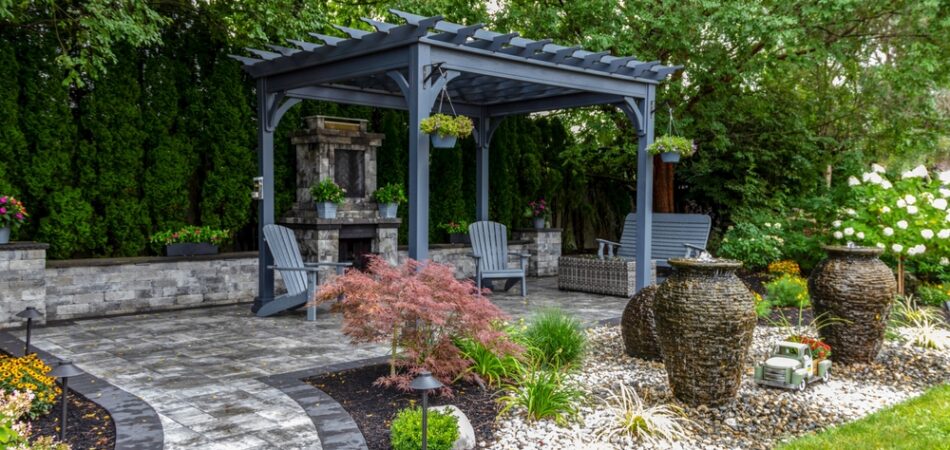
A Phoenix backyard can become difficult to enjoy when afternoon sun hits patios, seating areas, walls, and play spaces with little relief. With long stretches of intense desert heat, effective shade is not just a finishing touch. It can influence how and when you use your outdoor space.
Quick answer: Creating shade in a Phoenix backyard usually works best with a combination of trees, ramadas or other structures, covered patios, and thoughtful landscape design. Trees can provide natural, expanding shade, while structures offer more predictable coverage. The right solution depends on sun exposure, available space, irrigation, existing hardscape, and how you want to use the yard throughout the year.
What local homeowners should know
-
Western and southwestern exposures often deserve special attention because late-day sun can make patios and seating areas uncomfortable.
-
Shade trees need to be selected and positioned with mature size, water needs, roots, and proximity to structures in mind.
-
Ramadas and covered patios can create dependable shade without waiting for trees to mature.
-
Maricopa County’s desert conditions make water use and plant selection important parts of any shade-focused landscape plan.
-
Combining living shade with built shade can create more comfortable outdoor zones throughout the property.
Why Does Shade Matter So Much in a Phoenix Backyard?
Shade matters in a Phoenix backyard because it can make outdoor living areas more usable during periods of intense sun while also protecting selected surfaces and creating better conditions for plants and gathering spaces. A good shade plan considers where sunlight falls at different times instead of simply adding the largest possible covered area.
Local yards from Arcadia to Ahwatukee can have very different layouts. Some properties have large open lots with room for canopy trees. Others have compact yards where a strategically placed patio cover or ramada may make better use of limited space.
At Landscape 20/20 LLC, we approach backyard shade as part of the overall landscape rather than an isolated feature. That means considering circulation, planting areas, hardscape, irrigation, views, and the way each outdoor area will actually be used.
What Do We Commonly Observe in Valley Backyards?
A common field observation in Valley backyards is that shade works best when it is placed around actual outdoor activities rather than distributed randomly across the property. Dining tables, grills, lounge areas, poolsides, play spaces, and frequently used walkways may each have different shade requirements.
The Valley’s strong sun also changes throughout the day and across the seasons. A tree that shades one location in the morning may leave it exposed later. Likewise, a patio cover can protect the space directly beneath it while leaving nearby hardscape in full afternoon sun.
These are professional landscape-planning observations rather than published statistical findings.
How Can Better Shade Affect a Phoenix Backyard?
Better shade can improve backyard comfort, usability, landscape organization, and the overall experience of spending time outdoors. Instead of treating the yard as one exposed space, homeowners can create defined areas for dining, relaxing, entertaining, gardening, or moving between the house and other outdoor features.
Shade can also influence plant placement. Some plants need strong sun, while others benefit from protection during portions of the day. Designing these areas together can produce a more intentional landscape than adding plants and structures independently.
What Are Signs Your Backyard Needs More Shade?
Your backyard may need more shade if direct sun consistently prevents you from using spaces that were intended for everyday outdoor living. The clearest signs usually appear in how people use, or avoid using, different parts of the yard.
Watch for:
-
A patio that sits unused during much of the afternoon.
-
Outdoor furniture positioned against the house simply to find shade.
-
Dining or gathering areas that become uncomfortable during sunny periods.
-
Large stretches of exposed hardscape with little visual or physical relief.
-
Plants struggling in locations with unsuitable sun exposure.
-
A west-facing section of the yard that receives intense late-day sunlight.
-
Outdoor activity areas that are only comfortable early in the morning or after sunset.
When Should You Work With a Landscape Professional?
A landscape professional can help when creating shade involves tree placement, irrigation changes, hardscape, structures, drainage, or a larger redesign of the yard. Homeowners can monitor sun patterns themselves, but permanent improvements benefit from planning around mature plant sizes and existing property features.
Before making major changes, observe where shadows fall in the morning, around midday, and later in the afternoon. Consider how the yard is used now and what you would like to do there in the future.
Professional planning becomes especially useful when several shade solutions need to work together.
What Shade Options Work Well in Phoenix?
The most useful Phoenix shade options generally fall into four groups: trees, ramadas, covered patios, and landscape designs that combine multiple forms of shade. Each option offers a different balance of coverage, appearance, space requirements, maintenance, and flexibility.
1. Shade Trees
Trees provide living shade while adding height, texture, and greenery. Desert-adapted choices may fit well into water-conscious landscapes, but species selection matters.
Placement should account for mature canopy width, roots, irrigation, nearby walls, pools, structures, and utility areas. A small nursery tree should never be planned as though it will remain that size.
2. Ramadas
Ramadas can create a defined outdoor destination away from the house. They may work particularly well over seating, dining, or gathering spaces where predictable overhead shade is desirable.
A ramada can also become a visual anchor for a larger backyard design.
3. Covered Patios
Covered patios extend shade directly from or near the home and can make the transition between indoor and outdoor living more comfortable.
For homes in areas such as North Phoenix or Desert Ridge, a covered outdoor area can be planned around dining, seating, or views into the rest of the landscape.
4. Layered Landscape Shade
Combining structures and plants often provides the most flexible approach. A patio cover can create immediate shade while trees contribute canopy, greenery, and additional protection in carefully selected locations.
How Should Phoenix Homeowners Maintain Shade Landscaping?
Shade landscaping should be maintained by managing tree growth, irrigation, plant health, and the changing relationship between vegetation and structures. In the Sonoran Desert, seasonal heat and monsoon conditions make routine observation particularly useful.
Homeowners can visually check irrigation areas, look for damaged branches after storms, and watch for changes in plant health. Tree pruning, irrigation modifications, structural work, and problems involving large limbs are better handled by qualified professionals appropriate to the task.
What Results Can You Expect From a Shade-Focused Landscape Design?
A well-planned shade design can create more usable outdoor zones and a clearer relationship between patios, plants, gathering areas, and the rest of the property. Structural shade can provide immediate coverage, while tree-based shade develops as the landscape matures.
The goal should be realistic. Shade does not eliminate Arizona heat, and no single feature will necessarily protect an entire yard throughout the day. Good design instead places relief where it provides the greatest practical value.
What Mistakes Should You Avoid When Adding Backyard Shade?
The biggest shade-design mistakes involve choosing features without considering sun direction, mature plant size, water needs, and how the backyard is actually used. Phoenix properties benefit from planning the entire outdoor environment before committing to permanent changes.
Mistake: Planting a tree too close to a wall or hardscape.
Consequence: Mature growth may conflict with surrounding features.
Better approach: Plan for the tree’s mature dimensions and site conditions.
Mistake: Shading an area nobody uses.
Consequence: The investment provides limited practical benefit.
Better approach: Prioritize dining, seating, play, and circulation areas.
Mistake: Relying on one type of shade.
Consequence: Coverage may be limited at certain times.
Better approach: Consider whether trees and built structures can complement one another.
Mistake: Treating irrigation as an afterthought.
Consequence: New planting may not fit the property’s existing water strategy.
Better approach: Include irrigation planning in the landscape design process.
What Does a Common Phoenix Shade Project Look Like?
A common Phoenix shade scenario involves a backyard with an existing patio near the house, exposed hardscape farther into the yard, and limited protection from afternoon sun. This is a representative scenario, not a Landscape 20/20 LLC case study.
One possible design could preserve the patio, introduce a shaded gathering area, add appropriately located trees, and use planting beds to connect the spaces visually. Instead of attempting to cover everything, the design concentrates shade where residents are most likely to spend time.
What Landscape Services Can Help Create More Shade?
Landscape design and installation services can help coordinate shade trees, planting areas, patios, hardscape, irrigation, and outdoor structures into one practical plan. Looking at these elements together helps prevent one improvement from interfering with another later.
Our goal is to help homeowners explore landscape options suited to their property, preferences, and outdoor-living priorities.
How Do Trees, Ramadas and Patios Compare?
Trees offer natural shade that develops over time, while ramadas and covered patios provide more immediate and predictable coverage. For many Valley properties, the best choice is not one versus another but a combination selected for specific areas.
| Option | Main Advantage | Key Planning Consideration |
|---|---|---|
| Trees | Living canopy and landscape character | Mature size, placement, roots, and irrigation |
| Ramadas | Defined freestanding shaded area | Location, scale, and property requirements |
| Covered patios | Convenient shade near the home | Orientation, layout, and integration |
| Combined design | Multiple layers of shade | Coordinating all features as one landscape |
Where Can Shade-Focused Landscape Design Be Useful?
Shade-focused landscape design can be useful throughout Phoenix and surrounding Valley communities where outdoor spaces receive prolonged direct sun. The same planning principles may apply to properties in Scottsdale, Tempe, Glendale, and other parts of Maricopa County, although every site has different conditions.
What Happens When Backyard Shade Is Put Off?
Putting off needed shade can leave patios and outdoor features underused, especially when the property’s most important gathering areas receive prolonged direct sun. It can also lead homeowners to make isolated improvements later instead of creating a coordinated landscape plan.
Planning early provides an opportunity to consider tree growth, structures, irrigation, and hardscape together.
FAQ About Creating Backyard Shade in Phoenix
What is the best way to add shade to a Phoenix backyard?
The best approach is usually to combine shade solutions based on the property’s layout and sun exposure. Trees provide natural canopy, while ramadas and covered patios offer predictable structural shade. The right mix depends on available space, irrigation, existing hardscape, and where your household spends time outdoors.
Are trees a good option for backyard shade in Phoenix?
Yes, trees can be an effective source of backyard shade when the species and location suit the property. In Phoenix, homeowners should consider mature canopy size, roots, water requirements, surrounding hardscape, structures, and sun direction before planting. Tree shade also takes time to develop as the landscape grows.
Is a ramada better than a covered patio?
A ramada is often better for creating a separate destination in the yard, while a covered patio is typically better for shade immediately adjacent to the home. The choice depends on your layout and intended use. Some Maricopa County properties may benefit from incorporating both into a larger outdoor plan.
Which side of a Phoenix yard should receive the most shade?
Areas exposed to strong afternoon and western sun often deserve particular attention, but shade placement should follow the property’s actual orientation. Observe your Phoenix yard at several times during the day before deciding. The most useful shade is usually placed where intense sunlight overlaps with patios, seating, play areas, or other frequently used spaces.
Can shade be incorporated into a desert landscape?
Yes, shade can be incorporated into a desert landscape through appropriately selected trees, structures, and layered planting. A Sonoran Desert-inspired yard does not have to be completely exposed. Thoughtful placement can preserve a desert aesthetic while creating protected areas for outdoor activities and plants with different sun requirements.
How long does it take for a shade tree to become useful?
The timeline varies significantly by tree species, starting size, growing conditions, irrigation, and maintenance, so there is no reliable universal timeframe. Phoenix homeowners who need immediate coverage may prefer to combine young trees with structural shade rather than relying exclusively on future canopy growth.
Should I consider monsoon conditions when planning shade?
Yes, monsoon conditions should be considered when planning trees and outdoor structures in the Valley. Tree condition, placement, and ongoing maintenance matter in a region that can experience strong seasonal storms. Permanent structures also need to be planned appropriately for the property and applicable requirements rather than treated as temporary shade features.
Can a small Phoenix backyard still have effective shade?
Yes, a small Phoenix backyard can have effective shade when coverage is concentrated strategically. Rather than filling limited space with multiple large features, homeowners can prioritize a dining table, lounge area, or other high-use zone. Appropriate tree scale and careful placement become especially important on compact lots.
Create a Phoenix Backyard You Can Use More Comfortably
Thoughtful shade planning can turn an exposed yard into a more functional outdoor environment while respecting the realities of Valley heat, desert landscaping, available space, and water use. We can help you consider trees, patios, ramadas, planting, and other landscape elements as parts of one coordinated design.