
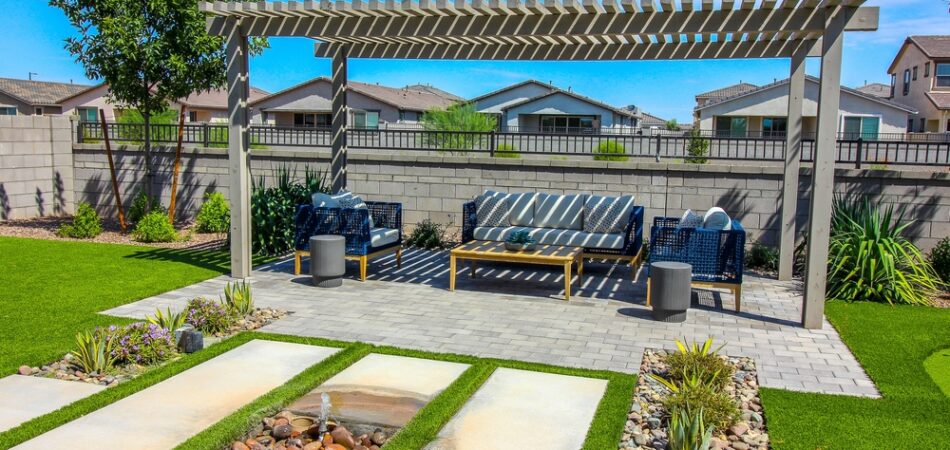
A Phoenix yard has to handle conditions that are tough on landscaping materials: intense sun, prolonged summer heat, dry soil, blowing dust, and sudden monsoon rainfall. The material that looks great on installation day also needs to make sense after years of exposure to the Sonoran Desert.
The best landscaping materials for Phoenix generally include decomposed granite, decorative rock, pavers, flagstone, and other hardscape materials selected for their intended use. DG and rock work especially well for broad desert landscape areas, while pavers and flagstone are better suited to patios, walkways, gathering spaces, and other surfaces where stability matters.
What local property owners should know
-
Decomposed granite is a practical choice for large desert landscape areas and can create a softer appearance than larger rock.
-
Decorative rock works well with the low-water landscape style common throughout Phoenix and Maricopa County.
-
Pavers provide a defined, durable surface for patios, walkways, courtyards, and outdoor living areas.
-
Flagstone offers a natural Southwestern appearance that fits especially well around desert plants and informal pathways.
-
Proper grading and preparation matter because monsoon runoff can move loose materials and expose weak spots in an installation.
Why Do Landscaping Materials Matter So Much in Phoenix?
Landscaping materials matter in Phoenix because desert heat, strong sunlight, limited rainfall, and seasonal monsoon storms create conditions that can expose poor material choices and installation problems quickly. A surface also needs to fit how people actually use the yard, whether that means walking, entertaining, drainage, or simply covering open soil.
From established properties around Arcadia and Sunnyslope to newer desert-style yards throughout the Valley, hardscape often covers a significant portion of the outdoor space. That makes color, texture, drainage, surface temperature, and maintenance important parts of the design.
Landscape 20/20 LLC helps local property owners plan landscaping around the realities of the desert environment. We look at materials as part of the overall landscape rather than choosing them based on appearance alone.
Which Landscaping Materials Work Best in the Phoenix Desert?
The best Phoenix landscaping materials are typically decomposed granite, decorative rock, pavers, flagstone, and purpose-selected hardscape products because each can serve a different role in a desert yard. The right combination depends on whether an area needs ground cover, a walking surface, drainage, visual contrast, or usable outdoor living space.
Decomposed Granite
Decomposed granite, commonly called DG, consists of small granite particles that create a relatively fine-textured surface. It is widely associated with Southwestern and desert landscape designs.
DG can be useful around desert plants, between larger hardscape features, along informal paths, and across areas where homeowners want a more natural-looking ground surface. Its earthy appearance works particularly well with the muted greens and sculptural shapes of Sonoran Desert plants.
Loose material can shift, however. Installation details such as edging, compaction, slope, and drainage should match the intended use of the space.
Decorative Landscape Rock
Decorative rock is one of the most recognizable materials in Phoenix desert landscaping because it provides durable ground coverage without requiring irrigation. Different sizes and colors can also help define planting beds and create contrast around trees, shrubs, cacti, and architectural features.
Rock is especially practical in areas that are primarily visual rather than used for regular foot traffic. Larger rock can also play a design role in drainage features and dry creek-style landscapes when the site is planned appropriately.
Pavers
Pavers are often the better choice when the goal is to create a stable patio, walkway, seating area, or connection between outdoor spaces. They provide a more finished walking surface than loose DG or decorative gravel.
In neighborhoods such as Ahwatukee and areas near the base of South Mountain, pavers can complement both Southwestern architecture and more contemporary homes. Color selection deserves attention in the desert because outdoor surfaces receive substantial direct sunlight.
Flagstone
Flagstone is a strong option for homeowners who want natural variation rather than the repeating pattern of manufactured pavers. Individual stones can be arranged for pathways, patios, stepping areas, and accents within desert landscapes.
Flagstone pairs naturally with DG, rock, native and desert-adapted plants, and Southwestern architecture. Because individual stones vary in shape and thickness, careful preparation is important when the surface will receive regular foot traffic.
How Should You Compare DG, Rock, Pavers, and Flagstone?
DG and decorative rock are generally best for landscape coverage, while pavers and flagstone are better choices for defined walking and living surfaces. Instead of searching for one material to use everywhere, Phoenix homeowners can often get better results by assigning each material to the job it handles best.
| Material | Common Local Use | Key Advantage | Main Consideration |
|---|---|---|---|
| DG | Ground cover, informal paths, planting areas | Natural desert appearance | Loose material can migrate |
| Decorative rock | Planting beds, open landscape areas | Low routine maintenance | Not ideal for every walking surface |
| Pavers | Patios, walkways, gathering areas | Defined, stable surface | Base preparation is important |
| Flagstone | Paths, patios, accents | Natural Southwestern character | Irregular stones require careful installation |
For many properties, combining materials creates more definition. A paver patio might transition into DG around desert plantings, while decorative rock or larger accent stone establishes borders and drainage features.
What Local Conditions Should Affect Material Selection?
Phoenix landscaping materials should be selected with heat, drainage, soil conditions, sun exposure, and monsoon runoff in mind. These factors influence both how an outdoor space performs and how much maintenance it may require after installation.
Summer sun is an obvious consideration. Hard surfaces exposed to direct afternoon sunlight can become very hot, so location and intended use matter.
Drainage is equally important. The Valley may be dry for long periods, but monsoon storms can deliver water quickly. Loose rock or DG installed in the path of concentrated runoff may move if grading, containment, or drainage has not been considered.
Soil and site conditions can also vary across Maricopa County. A successful installation starts below the visible surface, particularly for pavers and flagstone that need a properly prepared base.
What Are Common Landscaping Material Mistakes?
The most common landscaping material mistakes involve choosing for appearance alone, using loose material where a stable surface is needed, and overlooking grading or transitions between materials. In a desert yard, better planning can prevent ongoing maintenance problems.
Mistake: Using loose rock for a frequently traveled path.
Consequence: Walking can be uncomfortable and material may scatter.
Better approach: Consider pavers, flagstone, or another defined walking surface.
Mistake: Ignoring monsoon drainage.
Consequence: Runoff may move loose materials or collect where it is not wanted.
Better approach: Evaluate slope and water movement before placing material.
Mistake: Choosing every material independently.
Consequence: The yard can feel visually disconnected.
Better approach: Coordinate colors, textures, borders, plants, and hardscape as one landscape.
Mistake: Underestimating preparation.
Consequence: Even attractive materials may perform poorly on an unsuitable base.
Better approach: Match preparation to the material and intended use.
What Does a Common Phoenix Desert Landscape Look Like?
A common Phoenix desert landscape combines loose ground cover with defined hardscape so the property gets both practical coverage and usable outdoor areas. For example, a yard might use decorative rock around low-water plantings, DG in transitional spaces, and pavers for the route between the house, patio, and side yard.
Flagstone could then provide a more organic pathway through a garden or serve as a visual accent.
This is a common local scenario rather than a specific Landscape 20/20 LLC project. The exact combination should respond to the home’s architecture, drainage, sun exposure, plants, and how the owners want to use the property.
When Should You Call a Landscaping Professional?
A landscaping professional is worth considering when material selection affects grading, drainage, patios, walkways, large quantities of material, or the overall layout of the property. Homeowners can safely compare colors and textures themselves, but installation planning becomes more important as the size and complexity of the project increase.
Professional planning can also help determine where one material should transition into another and which areas need edging or a prepared base.
How Can You Maintain Desert Landscaping Materials?
Desert landscaping materials usually need periodic cleanup, redistribution, weed management, and inspection after heavy weather rather than intensive routine care. Phoenix property owners should pay particular attention to material movement after monsoon storms and to high-traffic areas where repeated use can disturb the surface.
Check DG and decorative rock for thin spots or migration. Keep soil and loose material from accumulating excessively on pavers or flagstone. Inspect edging and transitions between surfaces periodically.
Late summer and the period following monsoon activity are useful times to look for drainage-related changes.
Which Material Is Best for Your Phoenix Yard?
The best material for your Phoenix yard depends on what the specific area needs to do, with DG and rock serving ground-cover roles and pavers or flagstone usually making more sense for usable hardscape. Combining materials often creates the most functional desert landscape.
For a courtyard or outdoor entertaining area, a stable paved surface may be the priority. Around cacti, agaves, desert trees, and other low-water plantings, rock or DG may provide the more appropriate visual transition.
The goal is not simply to choose a desert-looking material. It is to create an outdoor space that works with the property.
What Does It Cost to Choose the Wrong Landscaping Material?
Choosing the wrong landscaping material can lead to additional labor, material replacement, drainage corrections, or repeated maintenance that could have been reduced through better planning. Problems often appear when a material is used for a purpose it was not well suited to handle.
A loose surface that constantly enters a walkway, for example, may require repeated cleanup. Poorly planned drainage can move material during storms. An uncomfortable walking surface may eventually need to be replaced with hardscape.
Planning around actual use is usually more practical than selecting materials by appearance alone.
What Areas Can Benefit From Desert Landscape Materials?
Desert landscape materials are appropriate throughout Phoenix and surrounding Valley communities where property owners want outdoor spaces suited to the region’s hot, dry climate. Similar material strategies can also make sense in nearby communities such as Scottsdale, Tempe, Glendale, and Paradise Valley, depending on the property and project requirements.
Frequently Asked Questions About Phoenix Landscaping Materials
Is DG good for landscaping in Phoenix?
Yes. DG can be a good Phoenix landscaping material for ground cover, informal paths, planting areas, and transitions between hardscape features. It has a natural desert appearance, but homeowners should consider drainage, edging, compaction, and foot traffic because loose material can migrate over time.
Is rock or DG better for a Phoenix yard?
Rock is often better for durable ground coverage, while DG can provide a finer, more natural-looking surface for certain paths and landscape areas. Neither is automatically better for every Phoenix property. The decision should account for drainage, maintenance preferences, nearby hardscape, plantings, and how frequently people use the area.
Are pavers a good choice for the Arizona desert?
Pavers can be an excellent choice for desert patios, walkways, courtyards, and other areas requiring a defined surface. In the Phoenix area, homeowners should consider direct sun exposure, surface color, drainage, and base preparation when planning a paver installation.
Does flagstone work well in Phoenix landscaping?
Flagstone works particularly well in Phoenix landscapes where homeowners want a natural Southwestern appearance for pathways, patios, or accent areas. Its irregular shapes complement DG, decorative rock, and desert plants, but careful preparation and placement become especially important where people will walk or place outdoor furniture.
Can monsoon storms move decomposed granite and landscape rock?
Yes, concentrated monsoon runoff can move loose landscaping material, particularly where water flows across slopes or through narrow drainage paths. Phoenix properties should be evaluated for grading and water movement before DG or small decorative rock is installed in areas likely to receive significant storm runoff.
What landscaping material is best around desert plants?
DG and decorative rock are common choices around desert-adapted plants because they visually complement Southwestern landscapes and provide ground coverage without creating another irrigated surface. The appropriate material around Phoenix plantings still depends on drainage, plant requirements, irrigation placement, and the overall landscape design.
What is best for a Phoenix patio, pavers or flagstone?
Pavers usually provide a more uniform patio surface, while flagstone provides greater natural variation and Southwestern character. Either can work in a Phoenix backyard. Homeowners should compare the desired appearance, furniture use, walking comfort, surrounding architecture, installation requirements, and how the patio connects with other landscape materials.
Should I replace bare dirt with decorative rock?
Decorative rock can provide a cleaner, more intentional desert landscape than leaving large areas of exposed soil, but the site should still be planned before material is added. Phoenix homeowners should consider existing drainage, weeds, plants, irrigation, slopes, borders, and future landscape plans before covering an area.
Build a Desert Landscape That Fits Phoenix
The right desert landscaping material should look appropriate for the property while handling the heat, sun, drainage patterns, and daily use that come with living in the Valley. We can help you compare DG, decorative rock, pavers, flagstone, and other landscape options based on how you want your outdoor space to function.
Create a more functional landscape built around desert conditions.
We can help you plan materials and hardscape that make sense for your property and outdoor goals.